Skip to content
Book an AI Automation Assessment

AutoMSP AI Automation Services — intelligent process automation, AI agents and AI infrastructure for operations-heavy businesses

AI Automation Agency · Agentic AI · AI Infrastructure

Turn Your Operations Into an AI-Powered Advantage.

AutoMSP designs, builds and manages intelligent AI automation systems that eliminate repetitive work, connect your business systems, and help your team scale without scaling operational overhead.

We engineer AI-powered operating systems for businesses drowning in repetitive operational work. From manual workflow to intelligent automation. From isolated AI tools to connected business systems.

Discovery-led
Process economics before tooling
Production-grade
Monitoring, evaluation, error handling
Vendor-neutral
Built around your existing stack
Manual operations → AI automation layer → autonomous operations
Sources
CRMEmailDocumentsVoiceAPIsDatabases
Intelligence
AI Agents
Orchestration
Automation Engine
Systems
Business Applications
Control
Human Approval
Result
Outcome

From manual work to autonomous operations

  1. Manual Task
  2. AI-Assisted Task
  3. Automated Workflow
  4. AI Agent
  5. Connected Agentic System
  6. AI-Powered Operations

The real bottleneck

Your Business Doesn't Have an AI Problem. It Has an Operations Problem.

Most organizations are not short of AI tools. They are short of orchestration. Work stalls in inboxes, spreadsheets and copy-paste steps between systems that were never designed to talk to each other.

  • 01Repetitive work that scales only by adding headcount
  • 02Disconnected systems with no orchestration between them
  • 03Spreadsheets acting as the integration layer
  • 04Email threads carrying operational state
  • 05Manual approvals sitting in inboxes
  • 06Copy-and-paste between applications
  • 07Slow response times to customers and internal requests
  • 08Manual data entry into multiple systems
  • 09Expensive administrative labor on low-judgment tasks
  • 10Information trapped inside PDFs, forms and scans
  • 11Employees answering the same questions repeatedly
  • 12Sales teams manually researching prospects
  • 13Support teams handling identical inquiries
  • 14Operations teams moving information between systems
  • 15Managers assembling reports by hand
  • 16Compliance teams collecting evidence manually
  • 17Teams switching between dozens of applications
  • 18Processes that stop when one person is unavailable

The automation candidate test

If a process happens repeatedly, follows recognizable rules, consumes human time and touches digital systems, it may be a candidate for AI automation.

Automation opportunity identification

We find the work before we build anything.

Automation value is decided during discovery, not during implementation. This is the framework we run before a single workflow is engineered.

  1. 01

    Discover

    Map existing workflows across departments, systems and handoffs — including the undocumented ones.

  2. 02

    Analyze

    Identify processes that are repetitive, expensive, slow, error-prone or dependent on individuals.

  3. 03

    Prioritize

    Rank opportunities against a consistent scoring model before anything is built.

  4. 04

    Automate

    Design and deploy the automation as a production system, not a demo workspace.

  5. 05

    Integrate

    Connect CRM, ERP, email, databases, APIs, SaaS platforms, communication tools and internal systems.

  6. 06

    Optimize

    Monitor performance, handle exceptions, evaluate output quality and continuously improve.

Prioritization criteria

Time savedLabor costRevenue impactError reductionCustomer impactAutomation feasibilityImplementation complexitySecurity requirementsROI

Complete AI automation service catalog

Fourteen capability groups, one operating layer.

Each group is delivered as engineered production capability — designed against your systems, secured, monitored and maintained.

Automation opportunity explorer

What can we automate?

Pick a function to see the manual process today, the AI capability that replaces the effort, the workflow we deploy, and the business outcome it produces.

Manual process today

Agent reads an email → looks up the account → checks order or ticket history → writes a reply → updates the CRM → creates a follow-up task.

AI capability

Intent classification, account retrieval, grounded response generation, action execution.

Automation workflow

Email received → intent identified → account and history retrieved → policy-compliant response drafted or sent → CRM updated → follow-up scheduled → anything unusual escalated with full context.

Business outcome

Faster response, lower administrative workload, cleaner CRM, fewer missed follow-ups.
Before / after

The same business, running differently.

Nothing about your commercial model changes. What changes is how much human effort each transaction requires.

Before
  • Manual data entry
  • Email chains carrying process state
  • Spreadsheets as the integration layer
  • Repetitive inbound and outbound calls
  • Human routing of every request
  • Manually assembled reports
  • Disconnected SaaS systems
  • Employees searching for information
After
  • AI-powered workflows
  • Automated routing and classification
  • Connected systems with a single source of truth
  • AI agents handling multi-step execution
  • Real-time information retrieval with citations
  • Automated reporting on a fixed cadence
  • Human approval where impact requires it
  • Continuous monitoring and evaluation

Business outcomes

Outcome categories, not invented numbers.

We do not publish percentage claims we cannot attribute to your workload. These are the categories automation moves, measured against your own baseline during discovery.

Reduce

  • Manual work
  • Administrative overhead
  • Data-entry errors
  • Response times
  • Process bottlenecks
  • Context switching

Increase

  • Employee productivity
  • Response speed
  • Lead throughput
  • Customer responsiveness
  • Operational visibility
  • Process consistency

Enable

  • 24/7 operations
  • Scalable workflows
  • Autonomous task execution
  • Better decision support
  • Faster customer service
  • Data-driven operations

How we talk about results

Baselines are captured before deployment: volume, cycle time, touch count, error rate and labor cost. After deployment those same measures are reported from system data. Anything we cannot measure, we do not claim.

Automation maturity model

Find your automation level.

Most operations-heavy organizations sit between Digitized and Automated. Knowing your level determines whether the next step is integration, AI assistance or agentic execution.

Level 2Automated

Rules and workflows automate predictable tasks with deterministic logic.

Integrations and triggers in placeNotification and routing rulesUnstructured work still manual
Find Your Automation Level

Solution architecture

Seven layers, designed together.

Automation fails when the intelligence layer is built without the integration, security and infrastructure layers beneath it. We design the whole stack in one pass.

L0

Business Systems

CRMERPHRISAccountingHelpdeskEmailCalendarDocumentsDatabasesCommunication
L1

Integration Layer

APIsWebhooksEventsETLMiddlewareAutomation platforms
L2

Intelligence Layer

LLMsRAGEmbeddingsKnowledge basesClassificationReasoningVisionSpeech
L3

Agent Layer

AI AgentsMulti-Agent SystemsTool CallingMemoryPlanningHuman-in-the-Loop
L4

Automation Layer

Workflow orchestrationEvent processingTask executionRoutingApprovalsEscalation
L5

Infrastructure Layer

CloudContainersKubernetesDatabasesVector storesObservabilitySecurityIdentity
L6

Business Outcomes

RevenueProductivityCustomer ExperienceCost EfficiencyComplianceScalability

Technology ecosystem

Technology-agnostic by design.

We don't force your business into one AI platform. We architect the right technology stack around your existing environment, requirements, economics and security constraints.

Ecosystem categories we work across

LLM providersAI modelsAI agent frameworksAutomation enginesCRM platformsERP systemsHelpdesk platformsCommunication platformsVoice AIDatabasesVector databasesCloud platformsKubernetesAPIsWebhooksRPABusiness intelligenceIdentitySecurityObservability

Productized services

Repeatable systems we have already engineered.

Each is a defined system with a defined sequence — adapted to your data, tools and approval rules rather than rebuilt from scratch.

AI Sales Automation

  1. 01Lead discovery
  2. 02Enrichment
  3. 03Qualification
  4. 04Outreach
  5. 05CRM
  6. 06Booking
  7. 07Follow-up

AI SDR

  1. 01Research
  2. 02Personalize
  3. 03Contact
  4. 04Qualify
  5. 05Book
  6. 06Update CRM

AI Voice Receptionist

  1. 01Answer
  2. 02Identify intent
  3. 03Retrieve information
  4. 04Schedule
  5. 05Route
  6. 06Record
  7. 07Follow up

AI Customer Support

  1. 01Understand
  2. 02Retrieve
  3. 03Respond
  4. 04Resolve
  5. 05Escalate
  6. 06Document

Intelligent CRM

  1. 01Capture
  2. 02Enrich
  3. 03Score
  4. 04Route
  5. 05Update
  6. 06Follow up
  7. 07Report

AI Document Processing

  1. 01Receive
  2. 02OCR
  3. 03Classify
  4. 04Extract
  5. 05Validate
  6. 06Route
  7. 07Store

Enterprise Knowledge AI

  1. 01Ingest
  2. 02Index
  3. 03Retrieve
  4. 04Reason
  5. 05Answer
  6. 06Cite
  7. 07Secure

AI Business Intelligence

  1. 01Collect
  2. 02Normalize
  3. 03Analyze
  4. 04Detect
  5. 05Summarize
  6. 06Report

AEO / LLM Visibility

  1. 01Audit
  2. 02Optimize
  3. 03Publish
  4. 04Build authority
  5. 05Monitor
  6. 06Improve

AI Workflow Transformation

  1. 01Discover
  2. 02Map
  3. 03Prioritize
  4. 04Automate
  5. 05Integrate
  6. 06Monitor
  7. 07Optimize

AI Infrastructure

  1. 01Architect
  2. 02Deploy
  3. 03Secure
  4. 04Observe
  5. 05Optimize
  6. 06Manage

Agentic Platform Engineering

  1. 01Design
  2. 02Orchestrate
  3. 03Integrate
  4. 04Deploy
  5. 05Evaluate
  6. 06Monitor

Custom automation

If the workflow is unique, we'll engineer the system around it.

Plenty of operational work does not fit a template. When that happens we build the system rather than bend your process to fit a tool.

Describe Your Workflow
  • Custom AI agents
  • Internal AI applications
  • Client portals
  • Department-specific copilots
  • AI-powered SaaS
  • Vertical AI solutions
  • API platforms
  • Internal automation platforms
  • AI orchestration systems

Automation economics

Model the workflow before you fund it.

Enter the numbers you already know. The model returns planning estimates you can pressure-test during discovery — nothing here is a financial guarantee.

Inputs

6
10h
$42
1,800
4%
$15,000
$900
60%

Planning estimate

Monthly manual hours
260
Annual manual hours
3,118
Estimated annual labor cost
$130,939
Potential hours recovered / year
1,871
Potential cost avoided / year
$78,564
Error-related value / year
$7,620
Revenue upside / year
$10,800
Indicative automation investment
$26,269
Estimated payback period
3.3 months
Estimated gross ROI (year 1)
269%

Planning estimate — not a financial guarantee.

Figures are derived only from the inputs above using transparent assumptions: 4.33 weeks per month, automation coverage applied linearly, error value estimated at 35% of an hourly rate per affected transaction, and revenue upside capped at 10% of the opportunity you entered. Actual results depend on workflow complexity, data quality, integration constraints and change adoption.

Validate these numbers in an assessment

Automation as a service

AI automation is not a one-time software installation.

Production automation requires monitoring, optimization, model management, workflow maintenance, security, integrations, evaluation and continuous improvement. Models change, APIs change, and so does your business.

Workflow monitoring
Agent monitoring
Error handling
Model optimization
Prompt and evaluation management
API maintenance
Integration maintenance
Security reviews
Performance optimization
Usage monitoring
Cost optimization
New workflow development
Reporting
Continuous improvement
Build Your AI Automation Stack

Implementation process

Six steps from discovery to managed operation.
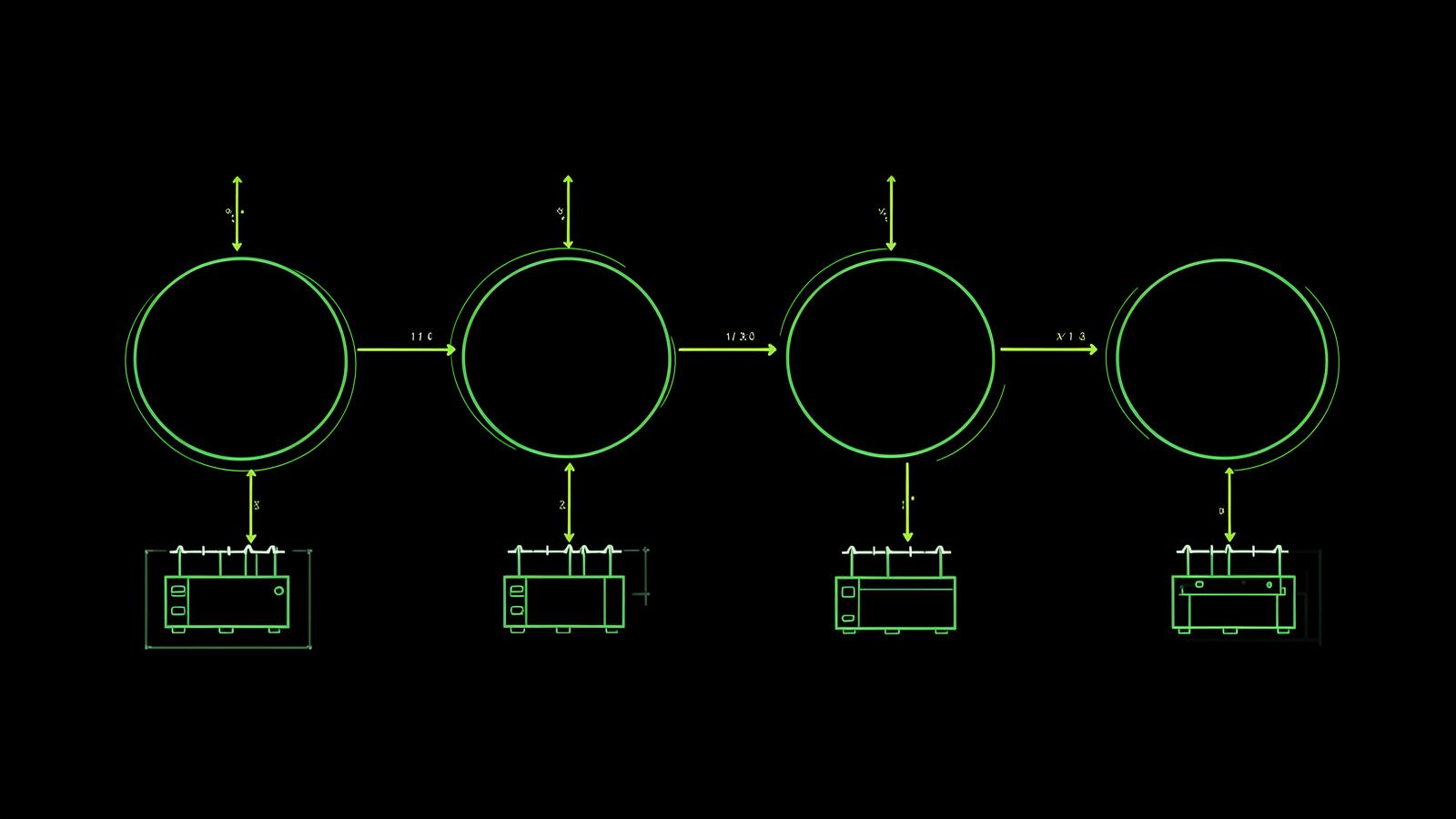
  1. 01

    Automation Discovery

    Understand operations, systems, bottlenecks and the economics of the work being done today.

  2. 02

    Process Mapping

    Document current-state workflows, handoffs, exceptions and data flows.

  3. 03

    Opportunity Prioritization

    Score and sequence opportunities by value, feasibility, risk and complexity.

  4. 04

    Solution Architecture

    Design the AI, automation, integration, data, security and infrastructure layers together.

  5. 05

    Pilot

    Build and validate a production-oriented proof of concept against real workload.

  6. 06

    Deploy & Manage

    Deploy, monitor, optimize and continuously expand the automation portfolio.

Human-in-the-loop

We do not advocate blindly autonomous systems.

Autonomy is a design decision made per action, not a philosophy applied to a whole business. High-impact actions pass through a policy check and a human before execution.

  1. AI detects
  2. AI reasons
  3. AI prepares action
  4. Policy check
  5. Human approval where required
  6. Execution
  7. Audit trail
Financial transactions
Compliance decisions
Security actions
Sensitive customer communication
Legal workflows
High-impact decisions

These categories always carry additional controls: explicit approval, policy validation, restricted tool access and a complete audit trail of what the system proposed, who approved it and what executed.

Security & enterprise readiness

Security requirements are designed into the architecture rather than added after deployment.

Automation touches your customer data, financial records and internal systems. Access, isolation, secrets handling and auditability are architecture decisions made before the first workflow ships.

Authentication
Authorization
Role-based access
Encryption
Secrets management
Audit logs
Data minimization
API security
Environment isolation
Human approval controls
Monitoring
Logging
Access controls
Vendor risk assessment
Model governance
Data retention
Compliance considerations

What we do not claim

We do not advertise certifications AutoMSP does not hold. Where your organization carries specific regulatory or contractual obligations, we design controls to support them and document how each requirement is addressed in the architecture — your compliance team remains the authority on sufficiency.

Integrations

Connected to the systems you already run.

Representative platforms across the categories we integrate most often. This is not an exhaustive or exclusive list.

CRM

  • HubSpot
  • Salesforce
  • Attio
  • Microsoft Dynamics

Communication

  • Gmail
  • Outlook
  • Slack
  • Microsoft Teams
  • Twilio

Automation

  • n8n
  • Make
  • Zapier
  • APIs
  • Webhooks

Data

  • PostgreSQL
  • Supabase
  • Redis
  • Vector databases

AI

  • OpenAI
  • Anthropic
  • Google Gemini
  • OpenRouter
  • Other model providers

Infrastructure

  • AWS
  • Azure
  • Google Cloud
  • Docker
  • Kubernetes
  • Cloudflare

Support

  • Intercom
  • Zendesk
  • Freshdesk

Documents

  • Google Drive
  • Microsoft 365
  • Notion
  • Confluence

If it has an API, webhook, database connection or machine-readable interface, there is a strong possibility we can integrate it. Where a system exposes none of those, we will tell you during discovery rather than after a contract.

Use-case library

Forty workflows we automate regularly.

Search or filter by function. Anything not listed here goes through the custom automation pathway.

  • Lead enrichmentSales
  • Lead qualificationSales
  • AI SDRSales
  • Outbound callingVoice
  • Inbound callingVoice
  • Appointment bookingVoice
  • Customer supportService
  • Ticket triageService
  • Email classificationService
  • Email responseService
  • Invoice processingDocuments
  • Purchase order processingDocuments
  • Contract extractionDocuments
  • Claims processingDocuments
  • Document classificationDocuments
  • Knowledge retrievalKnowledge
  • Internal searchKnowledge
  • Employee onboardingHR
  • Customer onboardingOperations
  • Compliance evidence collectionCompliance
  • Audit preparationCompliance
  • ReportingReporting
  • Executive summariesReporting
  • Data synchronizationOperations
  • CRM enrichmentCRM
  • CRM hygieneCRM
  • Pipeline managementCRM
  • Sales forecastingReporting
  • Marketing automationMarketing
  • Content repurposingMarketing
  • AEO monitoringMarketing
  • LLM visibilityMarketing
  • Workflow orchestrationOperations
  • Approval workflowsOperations
  • Escalation workflowsOperations
  • IT service workflowsIT
  • Security workflowsSecurity
  • HR workflowsHR
  • Finance workflowsFinance
  • Operations workflowsOperations

40 of 40 use cases shown

Is your business ready?

Twelve conditions that predict automation value.

Check everything that describes your operations today. Four or more usually justifies a discovery engagement; seven or more usually means there is meaningful value sitting idle.

Select all that apply

Result

0/12

Assessment Recommended

This is an indicator, not a diagnosis. The assessment quantifies volume, touch count, cycle time and labor cost per workflow so prioritization is based on your numbers.

Map My Automation Opportunities

Case study structure

Results shown only where verified.

We publish client outcomes only once they are measured and approved for release. Rather than fill this section with invented numbers, here is the structure each published case study will follow.

Slot open

Client
Named only with written approval.
Industry / company size
Sector and operational scale.
Problem
The manual workflow and the operational bottleneck it created.
Architecture
The AI, automation and integration design deployed.
Implementation
Exactly what was automated, and what stayed human.
Outcome
Measured results once verified against the pre-deployment baseline.

Slot open

Client
Named only with written approval.
Industry / company size
Sector and operational scale.
Problem
The manual workflow and the operational bottleneck it created.
Architecture
The AI, automation and integration design deployed.
Implementation
Exactly what was automated, and what stayed human.
Outcome
Measured results once verified against the pre-deployment baseline.

Slot open

Client
Named only with written approval.
Industry / company size
Sector and operational scale.
Problem
The manual workflow and the operational bottleneck it created.
Architecture
The AI, automation and integration design deployed.
Implementation
Exactly what was automated, and what stayed human.
Outcome
Measured results once verified against the pre-deployment baseline.

Differentiation

Why AutoMSP?

Business-first automation

We start with process economics, not AI tools. If the workflow doesn't justify the build, we say so.

Engineering-first implementation

We build production systems with error handling, logging and evaluation — not demo workspaces.

Agentic architecture

Agents are used where autonomous reasoning and execution create real value, and deterministic logic everywhere else.

Integration expertise

We connect the systems you already run instead of proposing a platform replacement.

Infrastructure capability

We build and operate the underlying infrastructure reliable AI operations depend on.

Security-conscious design

Access control, secrets handling, isolation and approval gates are designed in from architecture stage.

Vendor-neutral approach

Technology is selected against your requirements, constraints and economics — not our preferences.

Managed automation

We remain responsible for monitoring and optimization after deployment, because production changes.

Productization mindset

Successful automations become repeatable systems you can extend across teams.

Technology → business value

The chain that decides whether AI produces value.

Technology only matters at the end of this chain. Everything we build is designed to travel the whole distance — from capability to recurring, optimized business outcome.

  1. 01Technology

    Models, data stores, infrastructure, integration surfaces.

  2. 02AI Capability

    Reasoning, retrieval, classification, extraction, generation, speech.

  3. 03Workflow

    The real operational process, mapped step by step.

  4. 04Agent / Automation

    Deterministic orchestration plus agents where reasoning earns its place.

  5. 05Integrated Business System

    CRM, ERP, helpdesk, email, documents and databases connected.

  6. 06Client Outcome

    Time recovered, faster response, cleaner data, fewer errors.

  7. 07Recurring Service

    Monitoring, evaluation, error handling, cost and model management.

  8. 08Continuous Optimization

    Each cycle expands the automation portfolio.

How this works, end to end

Eleven steps from overloaded operations to scalable capacity.

  1. 1

    Your operations are overloaded.

  2. 2

    Most operational bottlenecks are caused by repetitive digital work.

  3. 3

    AI can now reason, retrieve information, use tools, communicate and execute multi-step workflows.

  4. 4

    AutoMSP connects AI with your existing business systems.

  5. 5

    We identify and prioritize the workflows with the highest economic value.

  6. 6

    We engineer the automation.

  7. 7

    We deploy the infrastructure and integrations.

  8. 8

    We add AI agents where autonomous execution makes sense.

  9. 9

    Humans remain in control of high-impact decisions.

  10. 10

    We monitor, optimize and continuously expand the automation layer.

  11. 11

    Your business gains scalable operational capacity.

Copy philosophy

  • Don't buy another AI tool. Automate the workflow.

  • Don't add another disconnected application. Build the system that connects your business.

  • Don't automate tasks blindly. Automate processes that create measurable business value.

  • Don't deploy an AI demo. Engineer a production system.

  • Don't stop at implementation. Continuously optimize the automation.

Who this is for

Operations-heavy organizations where automation creates measurable economic value.

If your transaction volume is high, your workflows are repetitive and your systems don't talk to each other, the economics usually work. If they don't, we will say so during discovery.

Company profile

  • SMB
  • Lower mid-market
  • Mid-market
  • Select enterprise departments
  • Roughly 10–1,000+ employees depending on automation complexity
  • Operations-heavy organizations
  • High-volume transaction environments
  • Repetitive administrative workflows
  • Multiple SaaS platforms without orchestration
  • High volumes of email, documents, tickets, calls, forms, spreadsheets, CRM records and approvals
  • Organizations facing labor constraints
  • Organizations scaling without proportional headcount
  • Companies undergoing digital transformation

Decision-makers we work with

CEOFounderCOOCTOCIOCISOCFOVP OperationsDirector of OperationsVP ITIT DirectorHead of AutomationHead of Digital TransformationRevenue OperationsCustomer OperationsCompliance leadersSecurity leadersDepartment heads

Pricing positioning

Engagement models, priced against scope.

We do not publish fixed prices, because workflow complexity, integration surface, data quality and security requirements decide the effort. These are the models we work within.

One-time discovery

Automation Assessment

Workflow discovery, mapping and a prioritized opportunity model with recommended sequencing.

Fixed scope

Automation Pilot

One high-value workflow built and validated against real workload before wider commitment.

Implementation

Production Deployment

Full implementation with integrations, security controls, monitoring and handover documentation.

Monthly recurring

Managed AI Automation

Ongoing monitoring, evaluation, maintenance, optimization and new workflow development.

Monthly managed

AI Infrastructure Management

Managed model gateways, data stores, environments, observability and cost control.

Project or retained

Custom AI Platform Engineering

Internal AI applications, portals, copilots and orchestration platforms built to your requirements.

Custom engagement

Enterprise Automation Program

Multi-department automation programs with governance, architecture standards and a delivery roadmap.

Request an Automation Assessment

Frequently asked

Questions operations leaders ask first.

What does an AI automation agency actually do?

AutoMSP maps your operational workflows, identifies which ones are repetitive and expensive enough to justify automation, then engineers the AI, integration and infrastructure layers that execute those workflows across your existing business systems — with human approval where impact requires it.

How is this different from buying another AI tool?

A tool adds another application for your team to operate. We automate the workflow itself: connecting CRM, email, documents, databases and helpdesk systems so information moves and actions execute without manual handling.

Which processes are good candidates for AI automation?

If a process happens repeatedly, follows recognizable rules, consumes meaningful human time and touches digital systems, it is likely a candidate. Document handling, ticket triage, lead qualification, CRM updates, reporting and knowledge retrieval are common starting points.

What size of company do you work with?

Operations-heavy SMB, lower mid-market and mid-market organizations, plus individual enterprise departments — typically 10 to 1,000+ employees depending on the complexity of the workflows involved.

How quickly can automation be implemented?

A discovery and prioritization engagement is short by design. From there, a single high-value workflow is usually piloted as a fixed-scope build before wider deployment, so you validate results before committing to a broader program.

Do AI agents make decisions without oversight?

No. We design policy checks and approval gates into the architecture. Financial transactions, compliance decisions, security actions, legal workflows and sensitive customer communication require human approval, with an audit trail for every action.

Are you tied to a specific AI platform?

No. We are vendor-neutral. Model providers, automation engines, data stores and cloud platforms are selected against your existing environment, requirements, economics and security constraints.

What happens after deployment?

Production automation needs monitoring, error handling, evaluation, model and prompt management, integration maintenance, security review and cost control. That is delivered as an ongoing managed service, alongside development of new workflows.

Start here

Your Next Competitive Advantage May Be Sitting Inside Your Operations.

Every repetitive workflow represents potential leverage. AutoMSP identifies where AI can remove manual effort, connect disconnected systems, accelerate decisions and create scalable operating capacity.

Find the work your business should stop doing manually.

Identify the highest-value workflows in your business that can be automated, augmented, or transformed with AI.